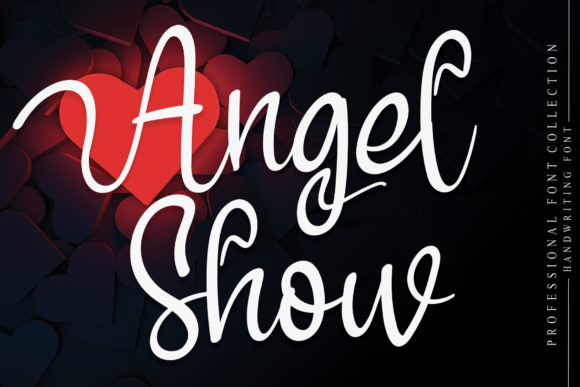
Angel Show Review
As a designer who has worked with countless fonts across various projects, I’ve come to appreciate the importance of a typeface that not only looks good but also functions well in real-world scenarios. Angel Show, part of the Script Amp collection, is one such font that deserves a closer look. It blends elegance with personality, making it a strong contender for a range of design applications.
The First Impression
Angel Show immediately conveys a sense of grace and warmth. The fluidity of its strokes and the softness of its curves give it a personal, almost handwritten feel. It’s not overly ornate, which makes it more versatile than many script fonts. The mood it creates is gentle yet confident—perfect for brands that want to feel approachable but still maintain a level of sophistication.
Its visual personality leans toward modern typography, but with a touch of traditional charm. It doesn’t scream for attention, but it does stand out when needed. This balance makes it ideal for projects where subtlety and style are both important.
Real-World Applications
In logo design, Angel Show can be a powerful tool. Its flowing lines add character without overwhelming the composition. It works well as a primary typeface for logos that aim to convey creativity, artistry, or a personal touch. However, it’s best used in conjunction with a more structured font for balance.
When it comes to brand identity, Angel Show can help establish a unique voice. It pairs well with serif and sans serif fonts, offering a nice contrast that enhances readability and visual interest. For packaging design, it adds a touch of elegance that can elevate product presentation, especially for niche or artisanal brands.
On product labels, Angel Show can be effective when used sparingly. It’s great for short phrases like brand names or taglines, but may not be suitable for lengthy text. In posters and flyers, it shines as a headline font, drawing attention while maintaining a clean aesthetic.
For invitations and merchandise, Angel Show brings a personal, custom feel. It’s perfect for wedding stationery, greeting cards, or branded apparel. In web design, it can be used for headers or callout text, adding a stylish element to digital interfaces.
Where to Use with Caution
While Angel Show is beautiful, it’s not without limitations. Large headlines can sometimes feel too delicate, especially if the surrounding elements aren’t carefully balanced. Short phrases work best, as longer text can become hard to read, particularly at smaller sizes.
It’s not the best choice for brand marks or decorative accents that require high legibility. In premium packaging or social posts, it may need additional support from other fonts to ensure clarity. As a supporting text, it’s better to pair it with a more readable typeface.
Readability and Brand Impact
Angel Show’s readability depends heavily on context. At larger sizes and in controlled environments, it performs well. However, in small text or low-resolution settings, it can lose its clarity. Designers should always test it in black and white and check how it appears on different backgrounds.
When used appropriately, Angel Show can enhance brand consistency by adding a unique visual signature. It helps build audience trust through its polished appearance and reinforces a professional image. Its emotional tone can also boost engagement, especially in creative or lifestyle-focused branding.
For editorial design, it’s best used as a highlight rather than a body font. In digital ads and social media graphics, it can serve as an eye-catching element when paired with simpler fonts. In printable design and Canva templates, it adds a creative edge that sets projects apart.
Practical Designer Notes
Before finalizing Angel Show for a project, I recommend testing it on real mockups. See how it looks in different sizes and layouts. Pay attention to spacing and how it interacts with other elements. Comparing it with uppercase and lowercase versions can reveal subtle differences that affect overall harmony.
Testing Angel Show beside other font types—such as serif, sans serif, script, or display fonts—can help determine the best pairing. It’s also wise to review commercial licensing terms before using it for client or business projects. A premium font like Angel Show can be a valuable addition to design assets, but only if used correctly.
Ultimately, Angel Show is a creative font that offers both beauty and functionality. It’s a solid choice for designers looking to add a touch of personality to their work. Whether you’re working on a digital product, a print campaign, or a branding project, Angel Show can be a useful ally when used thoughtfully.